Showing posts with label writing.... Show all posts
Tuesday, October 16, 2012
Your Writing Space
Do you have the writing space of your dreams? Is it a corner of another room, a comfy couch, or an office to yourself?
I know one writer who loves to write by hand in a notebook in her papasan chair which she calls her "writing chair". Another writer has a couch and uses the back of said couch for their storage. Another writer has a long narrow office with shelves along one wall a couch on the other and a desk at the end of the long room. I even know a writer that had a whole huge room in the basement with walls covered in pictures of her characters.
Regardless of what it is, It needs to be someting you are happy with. When I attended Storymakers Author Kevin James talked about ergonomics, and that if you are writing you need to be comfortble and in a position that is good for your body. Is your back strained after a few hours? Your eyes hurting? Your hands and wrists in pain? Chances are you need to re-asses your writing space and do something to make it better. If you do, your body and WIP will thank you.
What is your writing space like? Are you happy with it?
Tuesday, August 21, 2012
Beginings
I'm taking all sorts of risks right now.
Today is the first day of the school year. My kids dressed in new clothes and haircuts are now at school and ready to be molded and learn all sorts of new stuff.
Today is also a new begining for me. I only have one child at home and should be exctatic at the prospect of having so much time to write and work on my books.
Wrong.
This baby is not one of those entertain themselves all day long kids like my others. This one needs constant supervision. Remember me saying I'm taking a risk? Yeah, he's unloading the hall closet as I write this. It's going to be an interesting year.
Speaking of beginings. I have a few friends who stress over thier first pages worrying whether they are good or not. They worry about the level of action the plot promises that should be delivered in it. They worry about pacing, and introdoucing the characters without info dumping. While some of my other friends breeze through the first pages only to worry about something else. My main worry is just that I've gotten some element of grammar wrong and I don't see it. I rarely worry about first pages. I have too many other things to stress over.
I've written many first chapters and entered many first chapter contests. From my many years I have come to a few conclusions.
You must introdouce your main character. No "first chapter about anybody but the MC".
If the MC has a signifigant other, they must be thought about or mentioned. If this is a multiple POV book the other characters should be given at least a mention.
You need to give the reader a sense of the setting and whether its normal or if it is unusual for them.
Tell the reader what is the MC's normal life so when we take them out of normal the reader notices the change.
You should give the reader a hint about what the main conflict of the book is. By all means, don't tell them the climax or the resolution, but give them an idea of what is coming. It makes for a more satisfying story in my opinion.
The first chapter must be consistent in style and voice to the rest of the book. The pacing should indicate the pacing of the rest of the book. No switching narrative, person, voice or style.
Arrive late into the scene and leave early.
So what do you worry about? What do you believe is required in first chapters? I'd love to hear your ideas.
Thursday, August 2, 2012
Everything I learned about writing I learned at Storymakers.
Well okay almost everything. There've been a few books and a smattering of other conferences. But for the most part it is true.
I've gone to the last 6 conferences and come away with so much information my brain has done some sort of gelatin thing for at least a week after as it processed all the awesomeness into information I could use. I've learned writing, editing, synopsis, querying, plotting, and networking to name a few. I've come home and revised rewritten or just plain started writing and basked in the glow of what is the Storymakers conference.
But that isn't the best part.
I am a LDStorymakers success story. Yeah I know they don't have anything fancy or a list of those of us who are, but I am all the same.
Two years ago I sat at dinner Friday night with Some friends and Amy Orton who is the PR/designer of Walnut Springs. during the conversation I asked her if they'd be interested in a story I had been shoping. She said it sounded like something they'd want to see so I sent it off within days of the conference. I also pitched a middle grade non fiction to them at the publishing meet and greet and was told to send that one in too.
Skip to today I am eagerly awaiting the release of my technical suspense next month and the middle grade in the spring.
I wouldn't be where I am without Storymakers.
Tuesday, June 5, 2012
Lessons Learned
At the moment, I am editing as well as drafting. While I am awaiting the release of my first tech suspense, I am writing a new YA scifi/steampunk, and editing the #2 book to the one being released this summer.
This sweep is probably the tenth or eleventh time I have gone over the book in preperation for it's submission to my publisher. I am down to the point where I am making tiny little adjustments. Adding or subtracting words, punctuation, rearranging sentences for clarity and deleting fluff. The major stuff is all done. Chapters added, plot holes fixed, character developement polished.
So yesterday I sat down and re-numbered my chapters. I will not be adding anything major to the MS and felt safe making sure they were all in order and no numbers were off.
This is where the little lesson comes in.
After I write the rough draft I take a seperate document and make a "master chapter outline". It's usually about four pages long and includes the chapter number, the "unofficial" title* of the chapter, the plot reasons for the chapter, and a short synopsis. *unofficial title: a word or short phrase that gives me a clue as to what the chapter is about. IE the begining chapter of soon to be released book is titled "blood". Have I intrigued you yet? LOL
THIS document is my lifeline for the duration of the story. I print a copy of it and paste it into my project notebook. I also take this notebook everywhere I go. If I have an idea or an epiphany it goes into this book.
Back to the chapter outline though.
As I re-numbered the chapters I found two problems. I'd written down two chapter entries for a chapter I eventually didn't split, so I had an extra number. I'd also forgotten to add in four chapters as I wrote them into the MS. So instead of 46 chapters I actually have 49. Talk about messing with my allready addled brain.
While this "master chapter outline" saves me TONS of time. (Being able to "see" the book in four pages.) Forgetting to add those chapters and not correcting the non-split, messed with my productivity and took almost an hour out of time I could have have been doing something else.
I am sure there were reasons, whether good or bad, that I didn't update my list. But I have learned my lesson. I will definitely not avoid updating on purpose again. I'd rather take a few minutes on occasion than hours fixing it later.
This method works for me. It might not work for you. But hey its worth trying anything once right?
Tuesday, May 1, 2012
The Plot Point part of Sructure
by C. Michelle Jefferies
If you remember, last week we talked about the four parts of the story, and the four stages of character.
Today we're going to talk about plot points. Plot points are the defining moments in the story. They aare supposed to happen at the quarter marks in the story, IE PP1 at 1/4th the way into the story. However if they don't happen at exactly the proposed time or aren't just one scene, that's okay. I myself tend to have really short resolution stages and long mid points.
The first point in the story is called the hook.
It:
•Happens early in the story, preferably the first few chapters.
•Gives the reader some clue as to the conflict later in the story.
•Provides some action or conflict in the introduction part of the story.
The next point is called Plot Point 1. It happens at 1/4 the way through the story. It begins the reaction stageof the story, and the wanderer character stage.
It is:
•Most important part of your story.
•The MC’s call to action, or event that starts everything moving.
•The true introduction of the conflict.
•After this point the MC or Hero’s life can never be the same.
•Can be external or internal.
•Doesn’t have to be dark and earth shattering.
An essential element of Structure are Pinch Points.
They:
•Are a reminder of the conflict and bad guy throughout the story.
•Should happen at least once half way between PP1 and MP and once between MP and PP2.
•Can be sprinkled throughout the story.
Deepens the conflict, and raises the stakes.
The next Point is Mid Point, it is crutial to a good story. It marks the middle of the book and heralds in the active stage for the characters. This is where your character goes from wanderer to warior.
It:
•Can be a huge unexpected twist in the story leaving the characters and reader shocked, or something so subtle the MC doesn’t even know that things have changed. (but reader does)
•New information that changes the experience and understanding of the MC, the reader or both.
•Changes the MC from reactive stage to active stage
•Prevents the “sagging middle”
The last plot point is Plot Point 2, it happens at about 3/4 through the book and is where things wrap up and we move from active stage to resolution stage and where the character goes from warrior to martyr.
It is:
•The climax of the story. “The final car chase scene.”
•New information or something happens that takes the MC toward the conclusion of the story.
•The story shifts into resolution mode.
•No new info, or characters after this point
Which brings us to the resolution, in the Resolution we must:
•Hero must emerge and MC engages as the primary catalyst.
•Hero must conquer their inner demons and show personal growth.
•Ending of book should resonate with the readers.
•In a stand alone all major loose ends must be tied up.
•In a series only the book specific ends must be resolved, should leave some ends un finished leading into the next book.
I have drawn this out in a diagram. I hope this translates well.
Introduction ______Reactive _________ Active _______ Resolution
Orphan _________Wanderer_________Warrior _______ Martyr
Begining___________^________*________^_______*_______^_______________End
Plot Point 1 _________Mid Point _______ Plot Point 2 (Represented by ^)
Pinch Point 1________Pinch Point 2 (represented by *)
I hope you are enjoying this little jaunt into the world of Story Structure. I know it has revolutionized the way I write.
Wednesday, April 25, 2012
The Four Parts of a Book
Okay, last week I gave you an introduction to story structure. Today we are going to talk about the parts of the story. I am going to mention a few points like plot point one, mid point, plot point two. We'll go into those next week. All you need to know at this point in time is that those points divide the story into fourths.
Writing a book is alot like baking muffins. You have flour, sugar, eggs, oil, and leavening. leave out one of these things or put them in in the wrong ammounts or at the wrong time and your muffins are ruined. If you follow the recipe you are hopefully making some delicious muffins or stories.
So the following list are the parts of the story and where they occur. Each part is aproximately 1/4 of the book. They can be longer or storter, but it's generally a good guideline.
•Introduction - Beginning to Plot Point 1
Characters ordinary life, setting established
(Within the first chapters you need to give the reader a clue as to the conflict and character arc of the rest of the story. I call this moment the introduction of theme. Others call it the hook. If the reader doesnt feel a connection to the story or characters in the first pages they will most likely put the book down. )
•Reactive Stage - Plot Point 1 to Mid Point
“What the heck happened?”
(plot point one is the inciting incident, the moment that makes your character begin to move. The reactive stage is what the MC is doing in reaction to that point of movement. All of your scenes must reflect the reaction, and "not having a clear plan of action yet" part of the story. )
•Active Stage - Mid Point to Plot Point 2
“Not on my watch!” (or "oh no you didn't just point that gun at me." )
(Mid point is the moment where the MC changes from being the victim of the story to being the hero. The next stage is the active stage where the protagonist, or antagonist is pusing the plot forward to the climax of the story. Your plotting and scenes must reflect that ideal.)
•Resolution - Plot Point 2 to End of Book
Coming home, tie up all ends
(In a stand alone, all major character arc's, plot problems, and conflict must be wrapped up in a manner satisfactory to the reader. A few loose ends may be left undone to make the reader think, but they must be small and insignigant in regards to the main plot and arc's. In a series, all of the plot, character arc's and conflict that is pertinent to that books arc must be tied up. However, you can leave over series plot, character arc, and conflict open. If a character is leaving the series, their arc must be resolved. If a new character is being introdouced, their arc must be presented. If the antagonistic force in the book is unique to that book, it must be resolved. If the antagonistic arc is series wide it can be left un finished but should be addressed and the stakes and risks should be increased. )
In addition to the plot parts of the story there is a notion that your MC can go through character arc traits that describe some of the what and why of the characters progress through out the story. Below is a list of the character parts as they relate to the plot parts. This list is from the author and book: Carol S. Pearson The Hero Within: Six Archetypes We Live By
•Orphan
Lacks direction, lives in ordinary world
•Wanderer
Reacting to PP1, moving but no plan
•Warrior
Reacting to MP, has clear plan, building to PP2
•Martyr
PP2 and beyond, willing to sacrifice, becomes hero
One thing to note, the main plot conflict should be resolved right around plot point 2 or the moment when the MC and the plot move from reaction stage, to resolution stage. Don't put the conflict and the character change in the middle of the resolution stage. The reader will most likely be dissatisfied with the end of the book and you dont want that.
Tuesday, April 17, 2012
An intro to Story Structure
A few weeks ago I was talking about Story Structure and secondary characters. Seeing that is it something I use every day in my writing, I often times assume that everyone has heard about it. I know I am wrong because I talk to writers and I see their faces as I start talking plot points.
I've decided that rather than me talking about some obscure thing, and no one understanding me, I'd give you the basics.
Larry Brooks created Story Structure based off what screen play writers call the three part act. Although with novel writing, there are four parts, and three major points, and two sub points. Each part has a specific time reason and amount in the story to make it successful.
While there are those out there that say he's full of hot air, I have proof that what he teaches works. I had been writing by the seat of my pants for years; writing, editing, and submitting with no success. No partial or full requests from agents or publishers. I found Story Structure, wrote my book and revised it using what I'd learned, and wrote, edited, and sold my MS in three years.
If you are happy with your current style of writing, wonderful! If you are tired of writers block, lacking character arc's, and sagging middles as well as a ton of other writer maladies, Story Structure may be just what you are looking for.
If you are curious and/or impatient you can find Brook's book Story Arcitecture in a number of places.
Join me next week as we talk about the parts of a story.
Tuesday, March 6, 2012
Wow . . .
. . . A new post, admit it you're surprised aren't you?
So am I.
I apologize, my family life has had some critical emergencies that demanded my time, and the anti muse (my one year old) is as busy and trouble making as ever. (He's trying to destroy the clothes drying rack as I type.)
Alot of things happening here in the household. Some awesome, some heartbreaking. But we're alive and well.
Ome critical thing i have learned lately in my writin is that distance is a good thing. In the midst of the crisis I put everything writing wise away and focused on my kid who needed help. Well today I came back and re-read some of it. Not only was it easier to add and cut some needed things but it felt "fresh" to me and i was able to not only see that I liked what I had been working on, but i could see where it needed help.
So if your feeling bored and tired of your WIP, maybe you should shelve it for a few weeks. IT worked for me.
Monday, July 11, 2011
How many times?
Can the same story be told?

One of the recent trends especially in YA is the re-telling of fairy tales. Think about how many times you have heard the Cinderella story in any media form. Ella Enchanted? The Goose Girl? It seems that those moral teaching tales written by Hanz Christian Anderson or the brothers Grimm etc. resonate with people of all ages.

Why is that? It makes me wonder. I guess it's the same reason we have a plethora of vampire stories and everyone is unique and has it's own fan following.

My favorite origonal and re-told story is "The Little Mermaid". I especially love the Disney version of it. Disney has done such a good job at adapting stories. Each story having a great concempt theme and plot. Who else would have thought about taking the little known (at least in America) story of a girl dressing up as a man and saving China. (My good friend from Malaysia, has been told that story from when she was little.)

So the other day as I was finishing my MG book I had this really cool idea for this amazing story. It came to me with such clarity and a complete plot it struck me silent for a moment as the story unfolded in my head. Like a flower blooms. So as I paused from finishing my MG and pleaded for this book to take it's time so the MG wasn't over run, I wrote the details down and saved them in their own document.

Well this morning after helping my hubby get off to his extremely early job, I had a scene that come to me about this new book. The scene was so good and the idea so cool I couldn't go back to sleep, so I went to my computer and wrote the ideas down so they were safe.

I sent the idea to my BFF writing friend and she came back saying "This sounds like. . ." one of the re-told fairy tales. She's right, in many ways it is a re-telling of the MC's character arc.

While some people think I might be disapointed I am not. I am excited to have the link to relate to. something to tell an agent "Like the modern re-telling of ______ this story follows . . . " Who wouldn't like that?

What is your favorite re-telling? Either book TV or Movie.
Wednesday, June 22, 2011
Worlds within worlds
I'm a huge fan of Parallel novels. I love reading a series of books that are all interrelated by worlds or characters or both. Probably why I also love writing novels that are interconnected.
I had this really cool idea, (still is cool) that involved a planet and some deadly storms. As I pondered this story I realized that this planet was the same as the one in "The Guardian War" stories. Only this story happened a long time before TGW. It felt right as I contemplated the universe at that point in time.
I also have an Urban Fantasy world and the latest story idea I had fits all nice and snug in that realm. As my story develops I am discovering all sorts of paranormal nasties to have fun with.
Some might think that parallel novels is cheating. Not having to build another world and not creating new characters. I totally agree, I am cheating, but I love the worlds I have created, why not take advantage of that? Why not use that rich and developed world where the reader gets to experience more because you're familiar with it?
What's your opinion? Do you like parellel works? What are your favorites?
Sunday, June 12, 2011
Having direction in writing
Often times begining writers write alot of stories in alot of genres before settling on one that they feel is right for them. While it may not be my favorite exercise, the creative writing assignment that forces you to think outside of your genre box is good for you as a writer. You might find that you write one style really well inspite of your preconcieved notions.
My first love as a young reader was Science Fiction. That was what I chose to write as a teen. Well 20 something years later I write technical suspense not sci/fi like I thought I would be writing. I don't write the science well but I have found I am good at character based thriller plotting style. And, even if I can't write a full on romance, I have romantic themes in my stories.
Funny story, my friend and I were talking and she had assumed that I wrote romance until I was telling her what "my assassin" had done in the most recent chapter.
Well, 7 years into writing seriously I have not only found a genre I love, Tech Suspense, (add a little Urban Fantasy here or there) but I have found a "theme" in my writing. As my logline says I write about "bad boys (or girls) that go good". My characters go through events in the MS that change them and their lives. I like the process of deconstruction I take them through to get them to a better place.
As of now I have 5 serious ideas or rough drafts about some bad boy or another and what happens to then as they change to being good. Granted, two of those ideas have a paranormal urban fantasy leaning, and I have a YA that while the character isn't a bad boy, he goes from being an immature teen to a responsible young adult. Obviously I have a pattern that works for me.
It's a nice feeling.
Friday, June 10, 2011
Life, a broken arm and three days without the internet.
I ONLY NEED FOUR MORE FOLLOWERS BEFORE I GIVE KEY LIME PIE BY JOSI KILPACK, AND BEAUTIFUL CREATURES BY STHOL AND GARCIA!!!!!!!
Yep, that is my life right now, not that its an excuse but I couldn't do anything I regularly do for three days. So yesterdy it was catch up on my sleep, my home, and my life. Sleep, we're doing better. House, there's a visible dent. Life well that is probably out of control most of the time anyway.
I digress tho. Sitting in the hospital with my laptop and no internet was a good thing. I pounded out my plot for a new book on Tuesday while waiting for our surgery time. I was able to go over and do some edits on my latest MG project I finished on last Friday. I also watched some hours of mind numing TV which is normally something I never do. Sometimes we all need to veg right?
I have had some really cool realizations lately and I know the direction I want to go in my writing. I have had some good interest in my Emergence manuscript and i'm giddy happy about that.
My birthday was a blast, I went to the Book Festival in SLC and got a pre release copy of Posession by Elana Jhonson. YAY! I also got a copy of Maze Runner by James Dashner signed for a promoting literacy project for my daughter. My son made a killing Sat, he walked away with five free books, that was awesome for him.
I promise to discuss the new/old direction I am going in my next post unless I have an apostrophy. LOL
Untill then, write like mad my friends. Dont forget to become a follower, I only need four more until I give away two free books.
Sunday, May 22, 2011
What do you tell your readers?
In the first chapter?
I recently entered a first chapter contest. While I didn't place, I got some good comments on my prospective stories. I actualy entered to get those opinions, and not to win. Although winning would have been nice.
The comments left me with some general questions though. What exactly do you put in that first chapter? Some of the judges told me that I didn't draw it out enough and needed to give them more information. Others told me that I drew the story past the ending point and that the chapter should end on page three. While none of them told me I had too much information regarding the plot, some told me they wanted to see more.
My question is this. Where is that level of information where the first chapter entices the reader to pick the book up and buy it, but doesn't tell you the whole story and ruin the reading of the book?
If I tell you that Dave is a unwilling superhero and if he doesn't hurry and finish his cereal in time to rescue the lady who is going to be pushed in front of the bus at 9:12 and that she is the one person who is going to be able to save the earth from destruction by discovering a new element that afternoon. Why even bother turning to page two?
I ran into this problem early in my writing career and thought I had come to a reasonable answer regarding the problem. Which is why I am asking you guys. I went to a writing website and entered my first page and the critiques were asking for more information, who what where why etc etc etc. Problem is, if I give you the who what where why etc in the first half page of the book it isn't enticing, it becomes an info dump. Why bother reading the book if all the questions that should be discovered in the process of the text is given to you right away?
For example, I opened a book at a used book store and read the prologue. By the time I finished it I knew exactly what would happen in the rest of the book. Why, at that point bother reading it? On the other hand, I read a book where the first chapter was exciting and full of action I couldn't wait to get home and finish the rest of the book. Sadly the writer had worked so much on drawing the reader into the book that by chapter TWO it fell flat and I never finished the book. The first chapter was completely diferent, only the names were the same. It seemed to me that the writer worked so hard on the first chapter but not the rest of the book. What about the writer that gives you detailed information of the world for the first quarter of the book and the characters and plot start after chapter 10? Or the writer that starts the book in chapter 1 but the story started in either chapter 5 or -5?
What do you think? What is necessary in the first chapter and what isn't? What point in the plot is the first chapter written? How much back story, character development and setting is necessary? Do we always have to drop the reader into the action on page one?
Monday, May 2, 2011
Passing through the gates of knowledge

Yes I have gates on my mind. While I have prepared for the upcoming conference I have been bombarded with ideas for a new book I am writing. I feel bad because in between what needs to be done there's little time to actualy time to sit and give this book the time it wants. I am also working on a second set of MS's and characters to accompany my first and premiere series The "Prophecy Rising" series.
It's been an interesting year. I've learned alot about writing without writing much. While I will allways be learning something new in the realm of writing I feel as if i have passed through the "begining writers gate" and into the realm of seasoned writer. I feel as if I can now look at a piece of work and identify what might need work, and what is good. Sadly it is easier to look at someome elses work than my own. Probably because I am "in love" with my prose and it hasnt worn on me yet. (Although by the time I am done editing like I am on Emergence I am sick of it.)
I have also passed through the "know nothing about submitting gate" and started to shop my MS. I am pretty sure I won't make a fool of myself when i send something off now. I can rattle off the industry standard guidelines for a "standard submission" without thinking about it.
Last but definitely not least I have passed through the "knows nothing about plotting and pacing a novel gate". I now have the knowledge and skills I need to take an idea and develop it fully into a real story. I have evolved from the just write a cool story to I can write a cool story that people curse me because they are still awake at 3:oo am.
While these last seven years have been long and I am impatient as I wait to get an agent, I have learned so much and passed through many gates on my way to being a published author.
P. S. Gates are SO relevant to my YA fantasy/SF WIP. :)
Friday, April 22, 2011
The Magic of Miracles

When you have been doing the writing, trying to be published thing for almost seven years, with no major successes, it gets a little discouraging. Every once and a while I get a subtle message that assures me that my writing is often inspired.
I did alot of research as I was writing Emergence. I scoured websites books and Google Earth among other things. I picked up a little tourist book about Japan and found in the Kyoto section, a picture of a Monk dressed just as I described him. I didn't know exactly what a monk would dress like but I thought I remembered something and went on that memory. Well it turns out I hit the nail on the head.
I know it was inspiration, there's no other way to explain it. Just realizing it makes it easier to keep going. I would be negligent if I didn't openly recognize it and voice my thanks.
Wednesday, April 13, 2011
what makes a bad boy?

So I am trying to start a new book since I am now shopping my polished MS.
I have found a road to travel down and a brand I am comfortable with using my name
on.
I have a few questions tho. I hope you will help me out here.
What is diferent between the true villan of the story and the bad boy
protagonist?
What makes the bad boy appealing?
what makes him a bad boy?
What behavior in the bad boy is acceptable and not acceptable?
I may have to draw a name from the comments for a bag of chocolate. :)
Tuesday, April 12, 2011
Learning about writing
I spent Saturday in Ephiram UT at a writers conference. While most of the classes were about what I allready know, I did learn something new. Besides, a side benifit of going to this conference was to hang out with my writerly friends.
I don't think there was anything wrong with the confrence, there were alot of teens and first timers and they were probably sucking so much of it in that their brains were about to explode. I've been there myself.
I'm far from the perfect writer and know I still have alot to learn. That is why in less than 30 days I'll be going to another conference in SLC this time and I am sure to be one of those beginner, head exploding people at this one.
If you are serious about writing, you need to go to things like this. Not only do you learn so much, you get to meet people and network. I've come home before and felt as if my brain had turned to mush and needed a few days to unload and reorganize everything i was taught.
Even if you went and just listened and had epithanies about your book it'd be worth it.
Tuesday, April 5, 2011
By the letters

Alot of my friends are doing an A-Z blogfest where each day of the month's post is based on one letter. While the idea is intriguing and their posts are great. I didn't have time to go through over 200 participants posts every day. I barely have time to get online with all this new baby demands. So using their idea, (shamelessly) I will do a little alphabet of my own and call it good unless I see the necessity to do more.
The writers ABC'S
A is for Aspire. So you want to be a writer, you have these great ideas and think they'd make a great book heck maybe even a movie. So you sit your butt in a chair and start writing. By page 50 you hate it and think its blather. A should be for ambition and application. Learn your craft. Realize every writer gets tired and sick of their writing were a huge bunch of chickens. The diference between a writer and a published author is the time spent working your BUTT off to not only finish the bloody manuscript, but to go back again X 10 and revise.
B is for Butt. Get a comfy chair a snack and a large glass of what ever you fancy and write. Don't get up to answer the phone, don't get on the internet, don't turn on the TV. Just write. The surprise success of so very few authors is an accident. Those that go on to be successful time and time again work. Writing is their career, their first or second job.
C is for Craft. Learn how to write. Learn how to edit. Learn how to revise. Learn how to critique and take critiques. Learn how to get a THICK skin. Then learn how to write synopsis' and querys and send it out.
D should be for Determination but I think you get the point all ready. D is for details and dialogue. Learn the ins and outs of both and apply them.
Last but definitely not least on this post.
E is for Enjoy. Learn to enjoy all the parts of being an author even revising and writing things like querys. I love editing, I know it sounds strange but I love making my work really sing. :)
Hope you enjoyed my little soapbox post here. Now its time for me to follow my own advice. I need to get my MS out and work.
Saturday, March 5, 2011
Life calls the shots
I often describe myslf as a "write at home mom". I stay home with my seven (now six) kids and try to make writing a career. However this year and the last, life is the one who has been controling me instead of me controling it. Sometimes we just have to sit back keep our arms and legs inside the car at all times and enjoy the ride. Sometimes its rushing past so fast that I blink and a week has gone by. My baby turned SEVEN months yesterday. Where did SEVEN bloody months go? How did I let that time pass and not make an serious effort to document it or remember the details.
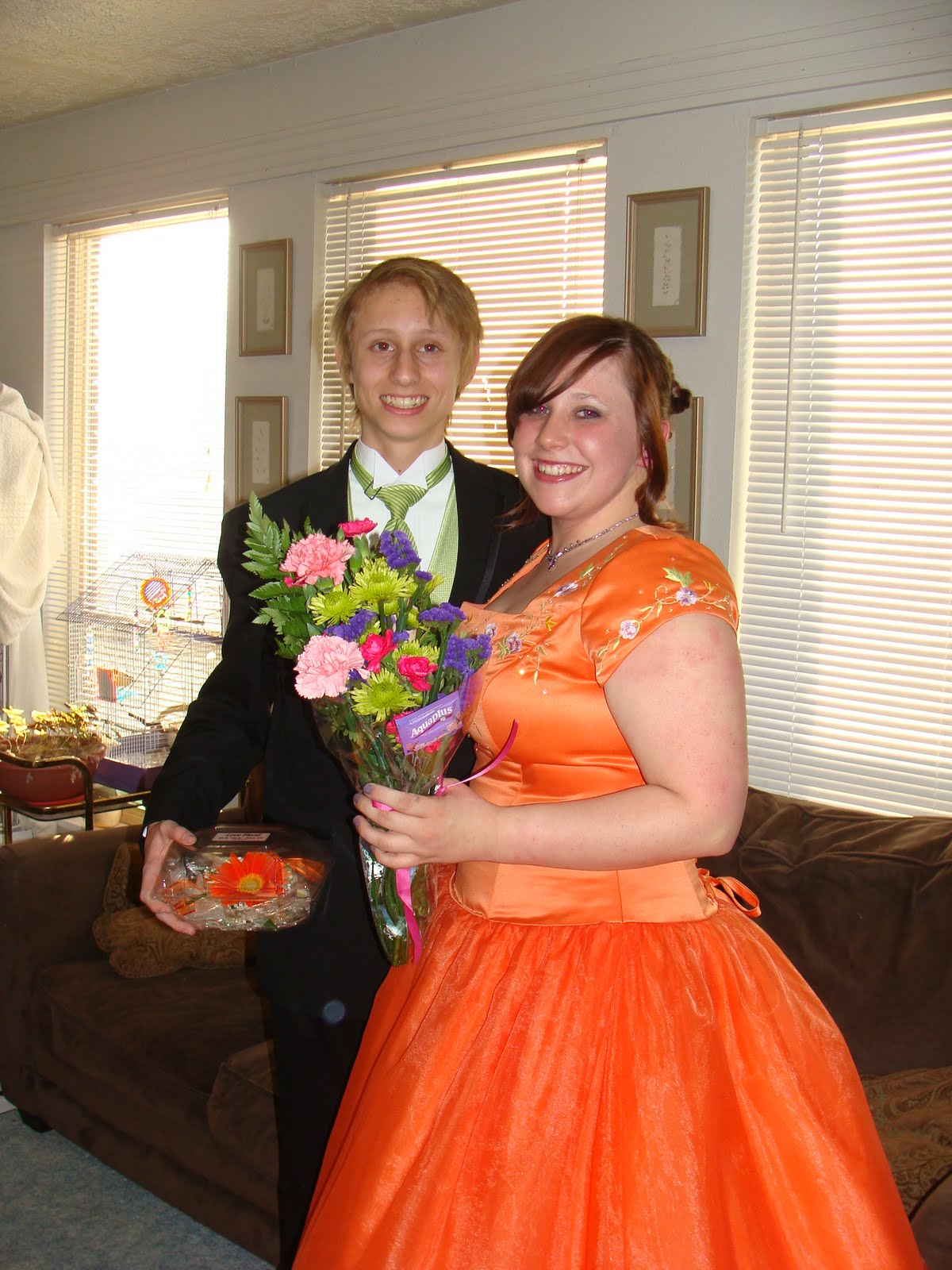
This week has seen me watch my oldest son pack his room and move to his grandparents, and my daughter prepare and go to her junior prom. I've had no time to write or do anything but doggie paddle to keep my head above water. You know the old addage that ducks make it look easy but under neath the calm feathered appearence they are swimming like mad. Yeah I am a duck.
I hope sometime soon I can stand up when the rollercoaster car comes to a stop and get off the ride. The lyrics from Drive by Incubus keep rolling through my head. "When I drive myself my live is found." For now please enjoy the lovely picture of my daugher.
Wednesday, January 26, 2011
My goals for this year.

Yes I know that January is almost over. You can blame the lack of posts on a developmental thing called TEETHING. I have had to experience life outside of mothering in tiny snippets called nap time. Dont feel sorry, I love being a mom it's just that my muse requires me to be creative or shrivel and die.
So as to my goals. I have had at least all month ot think about it, right?
#1, I want an agent contract this year. I'd love a publishing one too, but an agent will suffice.
#2, I will make sure that my 4 yo is ready for school in August. I have plans and we are learning something new every day. This also includes potty training and were still working on that one.
#3, I will bake (create) more because it makes me happy. As well as hubby and kids. This is also a time for me to teach my kids some life skills and things like fractions.
#4, I will write as much as I can, given said schedule with the baby. I refuse to fall out of the drafting habit again.
#5, I will humor my creative side more. I will find projects and I will draw and sew and knit because I want to be diversified in my skills.
#6, I will be a red #2 stripe by December. And continue getting in shape while I do it.
#7, Improve my relationships with my children spouse and myself.
Subscribe to:
Posts (Atom)